Frequently Asked Questions
Feeding Pala
How do I feed Pala? Do I have to soak it in water?
Feeding Pala is simple — just measure and serve.
There’s no need to soak it. Because Pala is gently prepared at low temperatures, it retains more of its natural moisture compared to highly processed kibble. This supports digestion and means it can be fed exactly as it is.
As a general rule, highly processed kibble is very dry and tends to absorb water quickly, while gently prepared foods like Pala already contain more natural moisture and won’t behave the same way.
As with any diet, always ensure your dog has access to fresh, clean drinking water.
How often should I feed Pala?
We recommend feeding your dog once per day, or within a clearly defined feeding window.
Emerging research from the Dog Aging Project — analysing over 24,000 dogs — found that dogs fed once daily were associated with better long-term health outcomes and reduced risk of several age-related diseases.
This approach also aligns with how dogs are naturally designed to eat. In the wild, they don’t graze all day — they experience periods of eating and fasting. Giving your dog time between meals allows their body to rest, repair, and maintain optimal metabolic health.
That said, every dog is different. Puppies, very small breeds, and dogs with specific health needs may require more frequent feeding. If in doubt, consult your veterinarian.
How much Pala does my dog need?
The right amount depends on your dog’s ideal weight, activity level, age, and metabolism. Factors like whether your dog is highly active, more sedentary, senior, or neutered will all influence how much they need.
As a general guideline, most adult dogs thrive on 0.6–1% of their body weight per day when feeding Pala.
Puppies, on the other hand, require more energy to support growth and development, and typically need around 1–2% of their body weight per day.
This may seem like a small amount, but it reflects the way Pala is made. Because it’s gently prepared with minimal processing, it retains a high level of nutrients — meaning your dog gets more nourishment from less food compared to highly processed kibble.
For example:
- A 5 kg moderately active dog eating 1% would need around 50g per day
- A 25 kg moderately active dog eating 0.6% would need around 150g per day
Start within this range and adjust after a few weeks based on your dog’s body condition, energy levels, and overall appearance. You should be able to feel their ribs easily (but not see them prominently), and they should maintain a healthy, lean shape.
If you’re unsure, we always recommend consulting your veterinarian. You’re also very welcome to reach out to us at info@palapets.com — our team is happy to help you find the right feeding approach for your dog.
The feeding recommendation is smaller than our previous food—will my dog be satisfied?
Yes — and this is a very common question.
Many dogs are used to eating large portions of highly processed kibble, which can be lower in nutrient density. With Pala, the portions are smaller because each serving delivers more complete nutrition.
It’s also worth remembering that “feeling full” isn’t always the same as being properly nourished. Like humans, dogs don’t need to feel completely full after every meal to be well-fed.
There’s even a long-standing principle from Hara Hachi Bu — eating until you’re about 80% full — which is often associated with better long-term health. The same mindset can be helpful when thinking about how we feed our dogs.
Today, many pet dogs are overweight, and portion sizes that seem “normal” are often more than what they actually need. Feeding slightly less, but feeding better, supports a healthier body condition, energy level, and lifespan.
As always, monitor your dog’s condition over time — they should be lean, active, and satisfied after meals, even if the portion looks smaller than what you’re used to.
Do I need to add anything to Pala (vitamins or supplements)?
No — Pala is designed to be complete and balanced on its own.
Our recipes meet and exceed the nutritional recommendations set by FEDIAF, meaning your dog gets everything they need from Pala without the need for additional vitamins or supplements.
Because of this, adding extra supplements is usually unnecessary — and in some cases, over-supplementation can do more harm than good.
We also do not recommend adding salmon oil to Pala’s complete recipes, as they are already naturally rich in omega fatty acids.
The only time supplementation may be appropriate is if your dog has specific health needs or has been advised by your veterinarian to follow a tailored plan.
If you’re ever unsure, feel free to reach out to us at info@palapets.com — we’re happy to help guide you based on your dog’s individual needs.
Can Pala be mixed with other foods as a topper or mixer?
Yes — Pala can absolutely be used alongside other foods, either as a topper or as part of a mixed feeding approach.
It’s a great way to enhance your dog’s meals or to encourage more selective eaters, thanks to its natural taste and nutrient density.
Many owners — especially with smaller dogs — also use Pala as part of a hand feeding routine. For example, feeding a main meal (such as raw food) once per day, and then using Pala throughout the day during training or as rewards.
This means your dog is still eating their daily food intake, rather than consuming extra treats — helping to maintain a healthy weight while increasing engagement and motivation around food.
Hand feeding can also be a powerful way to build a stronger bond with your dog, improve focus, and create a more positive relationship with feeding.
If using Pala as part of a mixed diet, we generally recommend it makes up a meaningful portion of the daily intake to ensure your dog continues to benefit from its nutritional value.
Can I rotate between the different recipes?
Yes — in fact, we recommend it.
Rotating between recipes helps provide your dog with a wider variety of proteins and nutrients, supporting overall health and reducing the risk of developing sensitivities over time.
There’s no need to feed multiple recipes at once. Simply rotate naturally — for example, by finishing one bag before moving on to the next.
This way, your dog benefits from variety over time while keeping feeding simple and consistent.
My dog is very active—will Pala meet all the needs?
Yes — Pala is well suited for active and working dogs.
Our recipes are naturally nutrient-dense, providing high-quality protein and essential fats to support energy, endurance, and recovery.
For particularly active or working dogs, we often recommend:
- Recipe #3 (Beef & Salmon)
- Recipe #6 (Turkey, Duck & Herring)
These recipes are especially rich in protein and healthy fats, helping to fuel sustained activity and maintain optimal condition.
As always, you may need to adjust portion sizes slightly based on your dog’s workload and energy expenditure to ensure they maintain a healthy weight and performance level.
Don’t dogs need kibble to keep their teeth clean?
No — it’s a common misconception.
It’s not kibble itself that helps with dental health, but the mechanical, abrasive action of chewing. In reality, most kibble breaks apart too quickly to have a meaningful cleaning effect.
What’s more effective are firmer chews that encourage longer chewing time and help reduce plaque buildup naturally.
This can include options like air-dried treats or natural chews such as reindeer antlers.
We’re also big fans of Morten Vet Dentistry — you can find him on Instagram, where he does a great job educating dog owners about dental health and why chewing matters.
As with anything, variety and regular dental care — including brushing where possible — are key to maintaining good oral health.
Our complete recipes & treats
How is Pala different from other dog foods?
Pala is made using a fundamentally different approach to nutrition.
Our complete recipes are based on raw ingredients and gently air-dried at low temperatures — never exposed to the high heat used in conventional processing. This helps preserve natural enzymes, protein structure, and amino acids, while supporting optimal digestibility.
We formulate our recipes using only whole, natural ingredients:
- High-quality meats for essential amino acids
- Fish for bioavailable omega fatty acids
- Fresh vegetables for vitamins and antioxidants
- Icelandic kelp for naturally occurring minerals
Rather than relying on synthetic additives, we aim to meet — and exceed — the standards set by FEDIAF through real, nutrient-dense ingredients.
The result is a highly concentrated, biologically appropriate food that delivers more nutrition in every serving.
How will a Pala diet benefit my dog?
Many owners report noticeable improvements in their dog’s overall health and wellbeing after switching to Pala.
Commonly observed benefits include:
- Improved energy and vitality
- Healthier skin and a shinier coat
- Smaller, firmer stools and better digestion
These results come from feeding a diet made with minimally processed, natural ingredients, where nutrients are preserved and sourced from high-quality meats and fish — rather than relying on synthetic additives.
If you’d like to hear directly from other dog owners, we encourage you to explore our reviews on Trustpilot, where customers share honest feedback about how Pala has impacted their dogs’ health and daily lives.
My dog is allergic. How can I find the right food?
Food allergies are often more complex than they first appear.
In many cases, dogs react not to the protein itself, but to environmental factors such as dust mites — which can be present in highly processed dry foods — or to the overall quality and processing of the ingredients.
It’s also not uncommon for sensitivities to be linked to how ingredients are handled and processed, rather than the ingredient itself. At Pala, we use high-quality cuts of muscle meat and nutrient-rich organs from European sources, rather than heavily processed meat meals. Because of this, we often see that dogs who previously struggled with certain proteins are able to tolerate them when switching to a more natural, minimally processed diet.
That said, true protein intolerances do exist. If your dog has a confirmed sensitivity to a specific protein, choosing the right recipe becomes especially important.
If you decide to reintroduce a protein your dog has previously reacted to, this should be done cautiously and at your own discretion, ideally with guidance from a veterinarian.
You’re also very welcome to reach out to us at info@palapets.com — our team of qualified nutrition professionals can help guide you toward the most suitable option for your dog.
Do you have food for puppies?
Yes — all of our complete recipes are suitable for puppies and support all life stages.
For growing puppies, we especially recommend:
- Recipe #2 (Chicken & Salmon)
- Recipe #6 (Turkey, Duck & Herring)
These recipes provide a strong nutritional foundation for development, with high-quality proteins and essential fatty acids to support healthy growth, brain development, and energy needs.
Recipe #6 is particularly beneficial as it includes three different protein sources, helping to introduce variety from a young age and support a more diverse nutrient intake.
As your puppy grows, we also recommend rotating between recipes to provide a broader range of nutrients over time — unless your dog has specific sensitivities.
What does “complete and balanced” mean?
“Complete and balanced” means your dog is getting everything they need — in the right amounts.
Complete means that all essential nutrients are present, including vitamins, minerals, amino acids, and fatty acids required for your dog’s daily health.
Balanced means these nutrients are provided in the correct proportions, so they can be properly absorbed and utilised by the body. This is especially important for relationships like calcium and phosphorus, which play a key role in bone development and overall health.
All Pala recipes are formulated to be complete and balanced for their intended life stages, meaning they can be fed as your dog’s sole diet with confidence.
What recipe should I choose?
If your dog has no known allergies or sensitivities, we recommend rotating between recipes — simply choosing a different one each time you start a new bag. This helps provide natural variety and supports your dog’s ability to tolerate different protein sources over time.
If your dog is more selective or has sensitivities, it can be helpful to start simple. We often recommend beginning with one of our most popular options, Recipe #3 (Beef & Salmon), and trying a smaller bag (100g or 400g) first to see how your dog responds.
From there, you can gradually introduce other recipes as appropriate.
If you’re unsure, feel free to reach out to us at info@palapets.com — we’re happy to help you choose the best option for your dog.
Will you add new recipes?
Yes — we’re always working on expanding our range.
We’re currently developing several new recipes that will be released soon.
We continuously evolve our collection based on both our nutritional principles and feedback from our community. If you have a specific request or suggestion, we’d love to hear from you — feel free to reach out at info@palapets.com
My dog has developed hard stools after starting Pala — is this normal?
Yes — this can be completely normal during the transition.
Dogs coming from a highly processed kibble diet often have softer, more frequent stools. When switching to a more nutrient-dense, minimally processed food like Pala, stools can become firmer, smaller, and less frequent.
This is generally a sign that your dog is digesting and utilising more of their food. However, in some cases, stools may initially become quite hard or dry while your dog’s system adjusts.
To support a smoother transition, we recommend adding a little extra moisture for the first week or so. This can be in the form of:
- Water
- 100% pure coconut water
- Dog-specific bone broth (unsalted)
You can also add a small sprinkle of chia seeds to support digestion.
These adjustments are usually temporary, and stools should normalise as your dog adapts. If your dog appears uncomfortable or constipated for an extended period, it’s always best to consult your veterinarian or reach out to us for guidance.
Storage and handling
How should Pala be stored after opening?
After opening, make sure to seal the bag properly after each use to maintain freshness. You can also use a clip to keep it extra secure.
Store Pala in a cool, dry place, such as a pantry or cupboard, away from direct sunlight and moisture.
For optimal freshness, we recommend consuming the contents within 2 weeks of opening.
If you have a smaller dog and expect the bag to last longer, you can store the sealed bag in the refrigerator to help extend its freshness slightly.
Can open bags spoil or go bad?
Yes — Pala can spoil over time, just like real food should.
Because we use natural, minimally processed ingredients and avoid artificial preservatives, the food remains fresh and nutrient-rich — but that also means it doesn’t have an indefinite shelf life once opened.
We use natural preservation methods, such as ingredients like apple cider vinegar, to help maintain freshness for as long as possible without compromising quality.
For best results, Pala should be stored correctly and consumed within 2 weeks of opening.
Rather than seeing this as a downside, it reflects a shift in how we think about pet food — towards something closer to real, nourishing food, where freshness and quality matter.
Why only 1 kg bags?
Because Pala is made from natural, minimally processed ingredients, freshness is a key priority.
Once opened, we recommend consuming a bag within 2 weeks. At the same time, feeding portions are significantly smaller compared to highly processed kibble due to Pala’s high nutrient density.
By offering a maximum size of 1 kg, we aim to ensure that most dogs can comfortably finish a bag within this optimal freshness window — without compromising quality.
We’re always evaluating our packaging and may introduce additional sizes in the future as we continue to grow.
Dogs and cats thrive on a protein based diet, as nature intended.
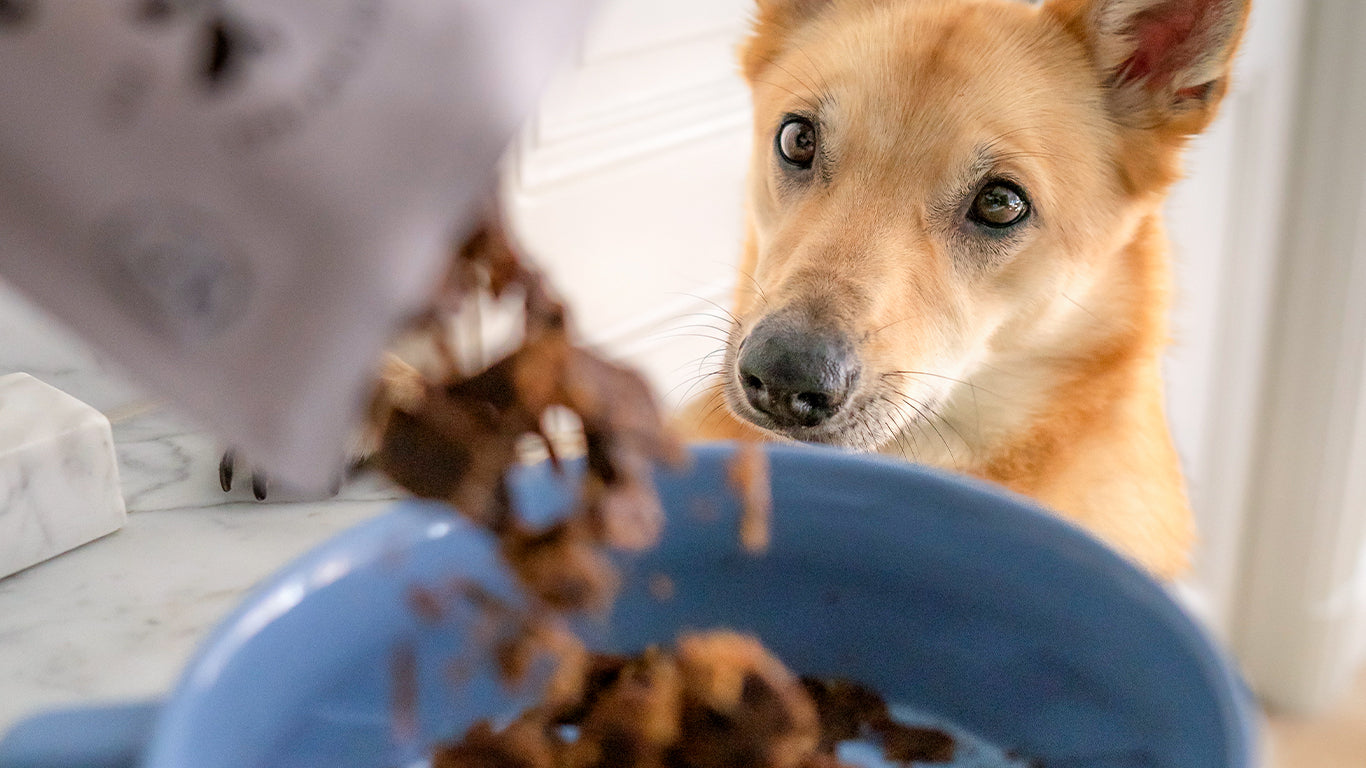
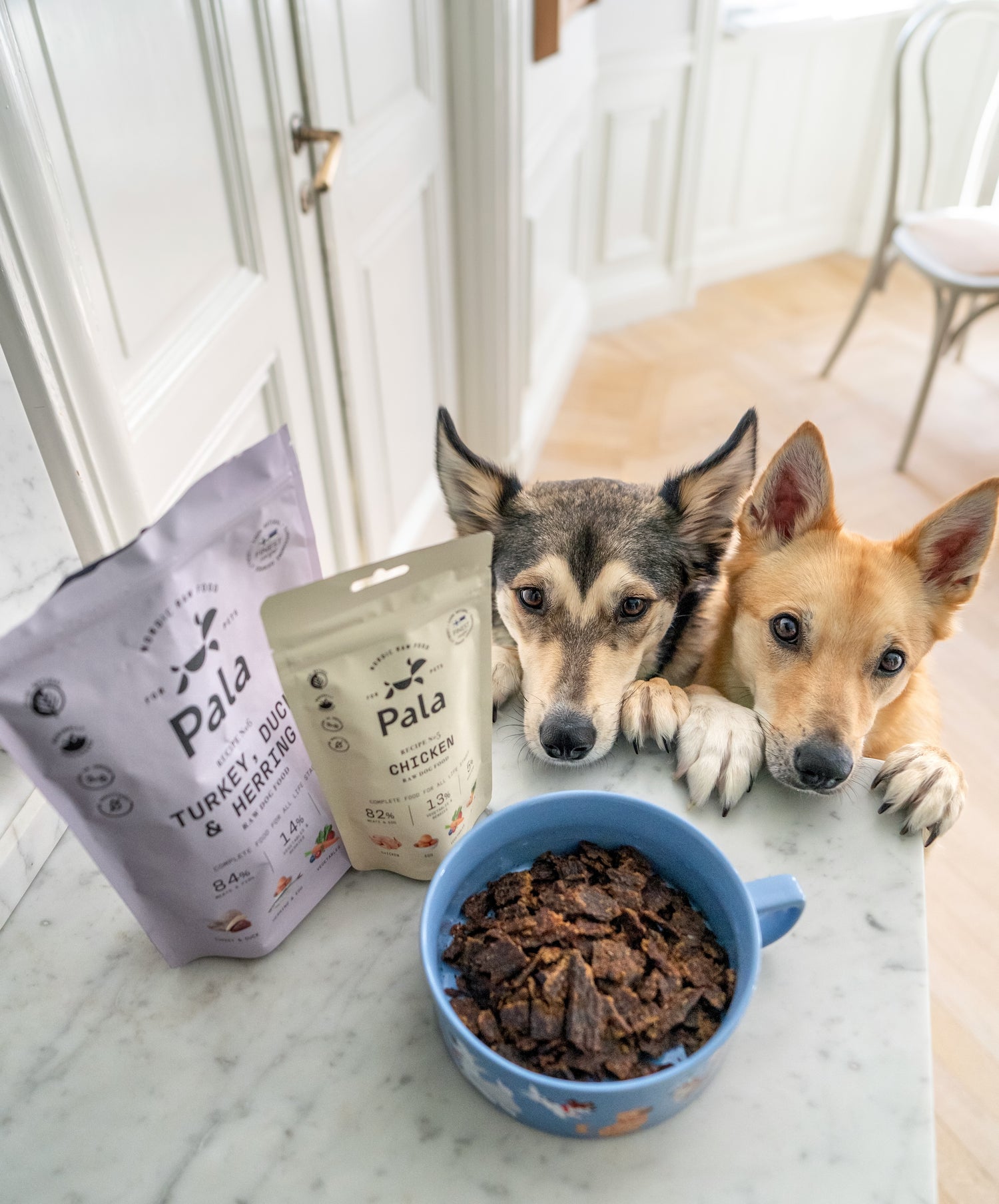
Our complete and balanced recipes contain at least 82% highly digestible raw meats and fish, 13-14% vegetables and berries rich in antioxidants and fiber, and 3-4% all-natural boosters. No grains, fillers, starch or plant-source Omegas here.
The science in our food
High-quality meat and fish is not everything. It's also about proportion, balance and enhancement. Our recipes are curated in collaboration with DogRisk, a leading independent research institution focusing on canine health and nutrition at the University of Helsinki. We also have a research partnership with Tallinn Technical University to stay abreast of the latest innovations in food preparation and preservation.